
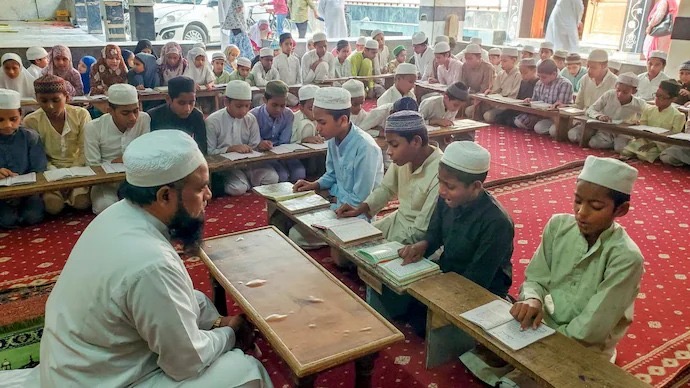
In a sweeping administrative reset that could reshape the functioning of religious schools in the district, the Aligarh administration has made biometric attendance mandatory for all madrasa teachers and linked the release of salaries directly to digital records.
District Magistrate Sanjiv Ranjan said the directive — issued under orders from the Uttar Pradesh government — is part of an effort to tighten oversight and modernise management practices across educational institutions.
“This shift is meant to ensure transparency, accountability and full adherence to official working hours across the system,” he remarked, calling the reform a structural fix rather than a symbolic change.
The minority welfare office confirmed that teachers in both government-aided and unaided madrasas will now be paid solely on the basis of biometric log-ins, marking a complete departure from past protocols where manual attendance sheets and institutional discretion played a significant role.
Aligarh currently has 120 recognized madrasas — only four of them government-aided and the remaining 116 unaided. The aided institutions employ 55 teachers and cater to around 14,000 students, while roughly 200 teachers in unaided madrasas teach close to 60,000 learners.
Officials said the new attendance system applies to every teaching staff member across this network without exception.
While the reform targets payroll and attendance discipline, administrators also link the move to bolstering campus safety and monitoring.
A senior minority office official noted that the biometric framework would help prevent discrepancies in presence records and reinforce protection for students and staff.
“Better monitoring means fewer blind spots. It will build confidence in madrasa operations and help us plan more responsibly for the future,” the official said.
However, the reform is unfolding against another sensitive backdrop: a state-mandated survey of unregistered or allegedly “illegal” madrasas — a politically charged exercise that has been kept on hold.
Ranjan confirmed the pause but offered no indication of when or whether the drive may resume, leaving schools and educators in a state of uncertainty.
For now, biometric attendance has become the centrepiece of Aligarh’s madrasa governance — a development that signals the government’s intent to enforce discipline through digital oversight and to re-engineer institutional accountability across the district’s religious education network.