
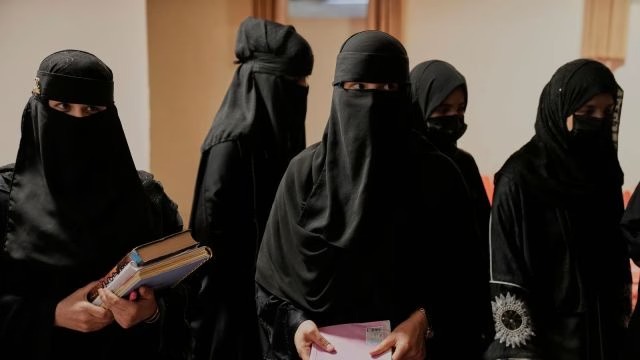
When the Taliban shut the classroom doors on Afghan women, 24-year-old Sodaba didn’t just lose her seat at a pharmacology lecture — she lost her sense of direction. Parks were closed.
Jobs vanished. Even voices and faces of women were pushed from public life. Afghanistan, once fragilely hopeful, became a prison of silence for its women.
But inside this suffocating silence, a different kind of classroom has begun to flourish — invisible, borderless, and out of the Taliban’s reach.
Desperate to learn, Sodaba turned to the internet and found an unlikely lifeline: a Dari-language coding course run by Afghan Geeks, a startup founded by Murtaza Jafari — a former refugee who once knew nothing of programming himself.
“I believe a person should not bow to circumstance,” Sodaba says, using only her first name for security. “Learning again gave me back my confidence — and my future.”
From sea survivor to tech mentor
Jafari’s own journey began on a rickety boat fleeing Turkiye, alone and unsure, until he arrived in a shelter in Athens, Greece.
With help from local educators, he learned to code from scratch and eventually built Afghan Geeks — a digital oasis now offering Afghan women training in software development, chatbot design, and website building.
Since its inception last December, the program has quietly enrolled 28 women — many under Taliban rule — into beginner to advanced programming tracks. Top students land internships, freelance gigs, and in some cases, roles within the startup itself.
“I’ve never seen their faces,” Jafari says. “I never ask for cameras. Their safety comes first. What matters is their growth.”
For clients abroad, hiring Afghan Geeks isn’t just good business — it’s a statement of solidarity. “They return because they believe in our mission: empowering women against all odds,” he adds.
Underground academies rise
In another corner of Afghanistan’s digital underground, 20-year-old Zuhal, operating under a pseudonym for her safety, co-founded Vision Online University.
What began as a modest team of five volunteers now serves more than 4,000 Afghan women with zero funding and no salaries.
“We have no support,” Zuhal admits, “but we have a mission — free education for girls, and a future for Afghanistan.”
Courses span psychology, Quranic studies, foreign languages, public speaking, nursing, and more.
And while managing the university, Zuhal herself is pursuing a computer science degree through an American online program — all on donated time, unstable internet, and sheer resolve.
“When the ban came, I was devastated,” she says. “But if I stop now, thousands of girls will lose hope again.”
Reclaiming voice through code
With public life increasingly off-limits to women — their visibility, speech, and even laughter banned — online spaces have become a defiant sanctuary.
Here, behind secure logins and anonymous usernames, Afghan girls are not just learning to code — they are encoding hope, identity, and resistance.
From anonymous teachers to faceless students, their digital revolution is real and growing.
“This is no longer just about education,” says Jafari. “It’s about survival. It’s about dignity. It’s about proving we are still here — and we’re not giving up.”