
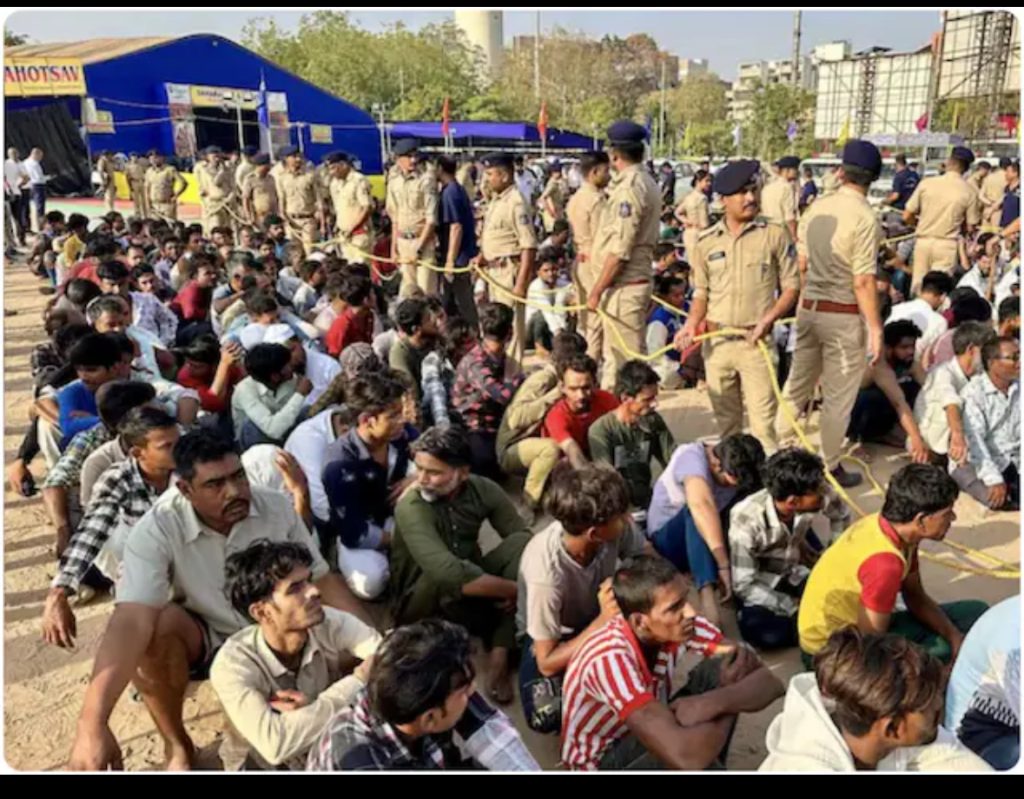
In a bold and accelerated operation driven by heightened national security concerns, Delhi Police have deported at least 770 undocumented Bangladeshi nationals over the past six months — more than 500 of them in just the last month—as part of a sweeping crackdown following the Pahalgam terror attack that left 26 dead.
This sudden spike in deportations comes under direct orders from the Union Ministry of Home Affairs, which ramped up pressure on law enforcement agencies nationwide to tighten immigration controls in the wake of the April 22 attack.
Senior officials confirmed that over 470 Bangladeshi nationals living illegally in the capital, along with 50 foreigners overstaying their visas, were airlifted from Hindon airbase in Ghaziabad to Agartala, Tripura—from where they were deported across the Bangladesh border.
“After Pahalgam, the urgency escalated,” a top Delhi Police officer told The Tribune. “We organized 3–4 special flights solely for deportation operations over the past month.”
The operation has grown into one of Delhi’s most expansive migrant crackdowns in recent history, involving coordination between Delhi Police battalions, the Foreigners’ Regional Registration Office (FRRO), and Border Security Force (BSF) units in Tripura and West Bengal.
Initially, detainees were transferred by road and rail, but aviation logistics were swiftly incorporated to accelerate deportations.
Five temporary detention centres have been established across the city to hold migrants ahead of deportation.
The roots of this drive stretch back to November 2024, when the MHA issued a confidential circular instructing law enforcement to verify and detain illegal Bangladeshi migrants and Rohingya refugees in Delhi.
Prior to the terror attack, police had detained 250 undocumented individuals—220 illegal entrants and 30 overstaying foreigners.
But the real escalation began after the BJP’s return to power in Delhi, with Home Minister Amit Shah reportedly directing agencies to “dismantle the conspiracy” behind illegal migration and neutralize networks responsible for forging identity documents, offering employment, and securing housing for undocumented migrants.
Investigators say over 34,000 individuals were screened during the verification drives. While most were able to produce valid documentation, 278 cases remain under investigation, and multiple FIRs have been filed by district police units, the Crime Branch, and the Special Cell, targeting alleged traffickers and document forgers.
Sources within the Home Ministry say this is just the beginning. New instructions have been dispatched to complete deportations “at the earliest” and continue probing illegal entry syndicates operating across state lines.
As the national security landscape shifts following Pahalgam, Delhi is emerging as the front line in a battle that now stretches beyond borders—and deep into the shadows of undocumented migration.