
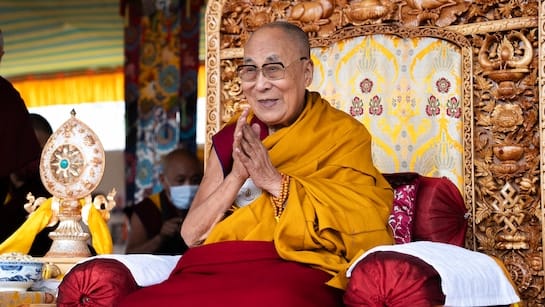
In a move reigniting tensions over Tibet, China has warned India against making provocative statements after Union Minister Kiren Rijiju firmly backed the Dalai Lama’s authority to decide his own successor—contradicting Beijing’s longstanding claims.
Rijiju, the Minority Affairs Minister and a practising Buddhist, stated on July 3 said that “no one has the right to interfere or decide who the successor of His Holiness the Dalai Lama will be,” adding that only the Tibetan leader and the institution he has established hold that sacred authority.

The statement came ahead of Rijiju’s visit to Dharamshala for the Dalai Lama’s 90th birthday celebrations.
The remark drew an immediate and stern reaction from Beijing. Chinese Foreign Ministry spokesperson Mao Ning accused Rijiju of ignoring the “anti-China separatist nature” of the Dalai Lama and urged India to “honour its commitments” on Tibet, warning that bilateral ties could be adversely affected.
“India should be clear of the anti-China separatist nature of the 14th Dalai Lama and act cautiously on Tibet-related issues,” Mao said, reiterating Beijing’s claim that the reincarnation of the Dalai Lama must adhere to “historical conventions,” including rituals controlled and approved by the Chinese central government.
Beijing insists that the next Dalai Lama must be chosen using a centuries-old process involving drawing lots from a “golden urn” and must be approved by the Communist Party—something the current 14th Dalai Lama and the exiled Tibetan Buddhist leadership have categorically rejected.
On July 2, the Dalai Lama reaffirmed that only the Gaden Phodrang Trust, the institution he founded, can recognize his reincarnation.
He also repeated his earlier stance that his successor would likely be born outside of China—a direct challenge to Beijing’s bid to control the succession process.
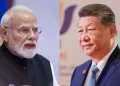
The war of words comes at a delicate juncture in India-China relations. Ties, deeply strained since the fatal Galwan Valley clashes in 2020, have only recently seen a thaw, marked by Prime Minister Narendra Modi and President Xi Jinping’s meeting on the sidelines of the BRICS summit in Russia last year.
The resumption of the Kailash Mansarovar Yatra for Indian pilgrims this year was seen as a confidence-building gesture by both nations. However, Rijiju’s candid remarks—and China’s sharp response—now threaten to cloud the fragile diplomatic reset.
Joining Rijiju in Dharamshala is Union Minister Rajiv Ranjan Singh, as part of the Indian government’s delegation to mark the Dalai Lama’s milestone birthday. Their presence signals New Delhi’s renewed assertiveness on the Tibet issue — one that Beijing is unlikely to overlook.