

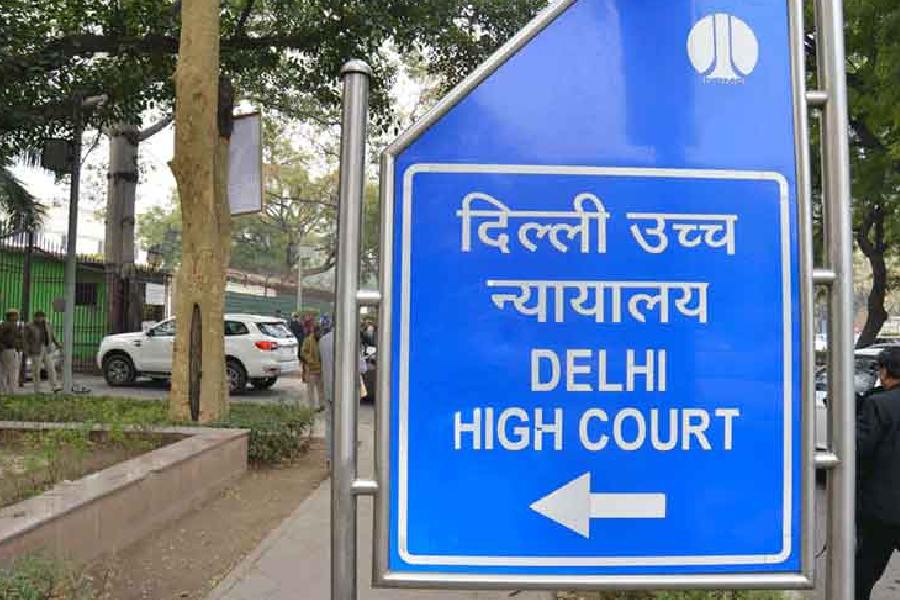
In a decisive ruling that reinforces the supremacy of discipline over personal faith within the Indian Armed Forces, the Delhi High Court has upheld the dismissal of Lieutenant Samuel Kamalesan, a Christian officer who refused to participate in Hindu religious rituals during his regiment’s weekly parades.
The court ruled that placing religious beliefs above lawful military orders constitutes indiscipline, especially for officers entrusted with maintaining unit cohesion and morale.


The verdict, delivered on May 30 by a division bench comprising Justices Navin Chawla and Shalinder Kaur, found no basis to overturn the Army’s 2021 decision to terminate Lt. Kamalesan from service.
Commissioned into the 3rd Cavalry Regiment in 2017, the officer repeatedly declined to enter the mandir or take part in pooja ceremonies — a stance that eventually led to his removal.
Clash of conscience and command
Kamalesan, a devout Protestant, maintained that his faith strictly prohibits participation in polytheistic rituals.
His refusal to follow his commandant’s instructions triggered disciplinary proceedings after multiple counseling sessions failed to bring resolution.
He also highlighted the absence of a church or an all-faith prayer space (sarv dharm sthal) in the regiment, which maintained only a mandir and a gurdwara.
He alleged that religious bias led to adverse entries in his Annual Confidential Reports, but the court found no evidence to support the claim.
Instead, it ruled that his repeated defiance indicated a fundamental unwillingness to conform to the military’s expectations of unity and obedience.
Morale over mandate
The Centre defended the Army’s stance, stating that regimental customs — including devotional rituals and war cries — are designed to build esprit de corps, not to propagate any particular faith.
“When an officer distances himself from these practices, it adversely affects the morale of the troops,” the Centre asserted. “Participation is a professional duty, not a religious endorsement.”
The High Court concurred, stating: “This is not a question of religious freedom at all. It is a question of following a lawful command of a superior. The petitioner has placed his religion above a lawful order — a clear act of indiscipline.”
No court martial required
In a move to avoid deeper polarization, the Army had opted not to initiate court martial proceedings. The court supported that discretion, agreeing that a trial could have inflamed public discourse and jeopardized the secular integrity of the forces.
“The Chief of Army Staff’s satisfaction that conducting a Court Martial would be both inexpedient and impracticable appears well-founded,” the bench noted.
Secular fabric, religious threads
The judgment acknowledged that certain regiments maintain traditions with overt religious overtones, including war cries and devotional practices. However, it emphasized that such elements serve symbolic and motivational functions, not theological ones.
“A higher and heightened responsibility is cast on Commanding Officers… to place the cohesion of the Unit above individual religious preferences, especially when leading troops in combat,” the court observed.
By prioritizing military unity over religious autonomy, the court’s ruling affirms the Armed Forces’ mandate to balance India’s rich religious diversity with the rigors of hierarchical discipline — a balance as fragile as it is fundamental.