


Prime Minister Narendra Modi and Chinese President Xi Jinping on August 31 sought to recalibrate one of the world’s most consequential relationships, underscoring peace at the border and pledging a new era of engagement.
Meeting on the sidelines of the Shanghai Cooperation Organization (SCO) summit in Tianjin, Modi told Xi that India is committed to advancing ties “based on mutual trust, respect, and sensitivity.”

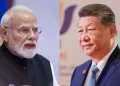
The talks – their second in less than a year – come against the backdrop of a fragile calm along the Line of Actual Control (LAC) in eastern Ladakh, where some 50,000–60,000 troops remain deployed on both sides despite last year’s disengagement.
“After the disengagement at the border, an atmosphere of peace and stability is now in place,” Modi said, noting progress in Special Representative-level talks on boundary management.
He highlighted two significant confidence-building steps: the resumption of the Kailash Mansarovar Yatra and the return of direct flights between India and China – the first time New Delhi has announced the restart of commercial air links.
Xi echoed the sentiment, describing the Tianjin meeting as part of a “restart” in relations since their talks in Kazan last year.
He called China and India “two ancient civilizations and pillars of the Global South,” urging both to act as “good-neighbourly friends and partners” and to pursue what he poetically framed as the “dance of the dragon and the elephant.”
Strategic undertones and global context
The meeting, which lasted an hour – longer than scheduled – was closely watched amid shifting geopolitical currents.
Delhi’s ties with Washington have been under strain after U.S. President Donald Trump imposed steep tariffs on Indian exports and criticized New Delhi’s Russian oil purchases. Against this backdrop, Modi’s outreach to Xi carries both strategic and symbolic weight.
Significantly, the Ministry of External Affairs (MEA) stressed that India and China “are development partners and not rivals” and that their differences “should not turn into disputes.”
Modi also emphasized that both countries pursue “strategic autonomy” – a pointed reminder that Delhi does not wish its relations with Beijing to be viewed through a “third-country lens.”
Both sides highlighted the 75th anniversary of diplomatic ties this year and pledged to deepen cooperation in trade, multilateral forums, and people-to-people exchanges.
Still unresolved is the larger issue of de-escalation in Ladakh, though both leaders expressed commitment to a “fair, reasonable, and mutually acceptable” settlement.
Building a cautious thaw
The Tianjin meeting marks Modi’s first visit to China in seven years. It follows a series of incremental steps since October 2024, when Modi and Xi met in Kazan, leading to troop disengagement at two friction points, the resumption of pilgrimages, and easing of travel restrictions.
The relationship remains shadowed by deep mistrust – including Delhi’s recent unease over evidence of Chinese assistance to Pakistan’s military during Operation Sindoor earlier this year.
Yet both sides appear determined to prevent tensions from spiraling and to reframe the relationship in terms of shared development.
“The cooperation of India and China is linked to the interests of 2.8 billion people of our two countries,” Modi said. “This will also pave the way for the welfare of all humanity.”