

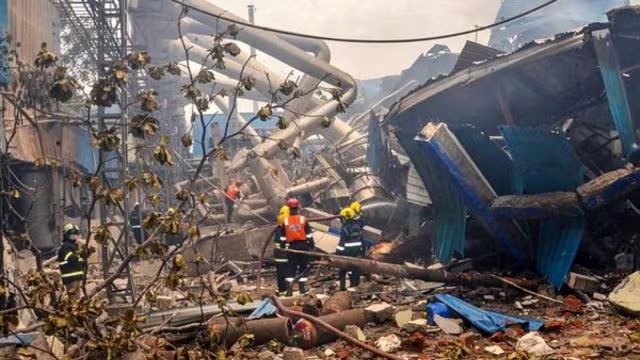
The deadly blast that tore through Sigachi Industries’ factory in Telangana’s Sangareddy district, claiming 36 lives, appears to be a “rarest of rare” industrial disaster triggered by extreme overheating in a spray dryer, according to officials probing the tragedy.
Investigators believe that the explosion, which reduced parts of the microcrystalline cellulose (MCC) manufacturing unit to rubble, was likely caused by thermal decomposition inside the dryer — a result of unchecked temperatures soaring beyond 399°C.


“What could have happened is thermal decomposition of MCC in the spray dryer. That is, MCC powder would have decomposed because of overheating,” said A V Ranganath, Commissioner of the Hyderabad Disaster Response and Asset Monitoring and Protection Agency (HYDRAA).
In normal operations, MCC spray drying should stay below 200°C. “We believe the temperature inside the dryer rose dangerously above 399°C — a threshold at which MCC begins to degrade.
This likely went unnoticed, which proved fatal,” Ranganath explained.
The situation was made worse by a critical failure in the factory’s heat regulation system — an interlocking safety mechanism designed to automatically cut off heat or trigger alarms if temperatures breach safe levels.
“In this case, the rise in temperature, visible on monitoring screens, was either missed or ignored,” he said.
The impact of the explosion was devastating, leveling large sections of the plant. Officials say the tragedy might have been avoided had standard safety mechanisms worked as intended.
“This kind of massive overheating incident is extremely rare. There’s no known history of a similar thermal failure in such setups,” Ranganath added.
A case has been filed against the company’s management under charges including attempt to commit culpable homicide and causing grievous hurt. No arrests have been made so far.
The timing of the blast tragically amplified the human toll — workers from both the general and night shifts had gathered for a meeting when the explosion occurred, Ranganath said.
A senior official from the department of factories, speaking anonymously, noted that the company did have heat cut-off mechanisms in place, not just for safety but to protect the quality of MCC — a pharmaceutical-grade substance used in capsule manufacturing.
The failure of these safeguards is now under scrutiny.
Sigachi Industries has operated from its Pashamylaram facility for over 35 years, but this incident marks a dark and defining moment — exposing potential lapses in both vigilance and accountability.