
Tensions across West Asia surged sharply on March 6 as Israel launched a powerful wave of airstrikes on Hezbollah’s stronghold in Lebanon, even as the United States stepped up its military pressure on Iran, marking a dramatic escalation in the ongoing conflict.
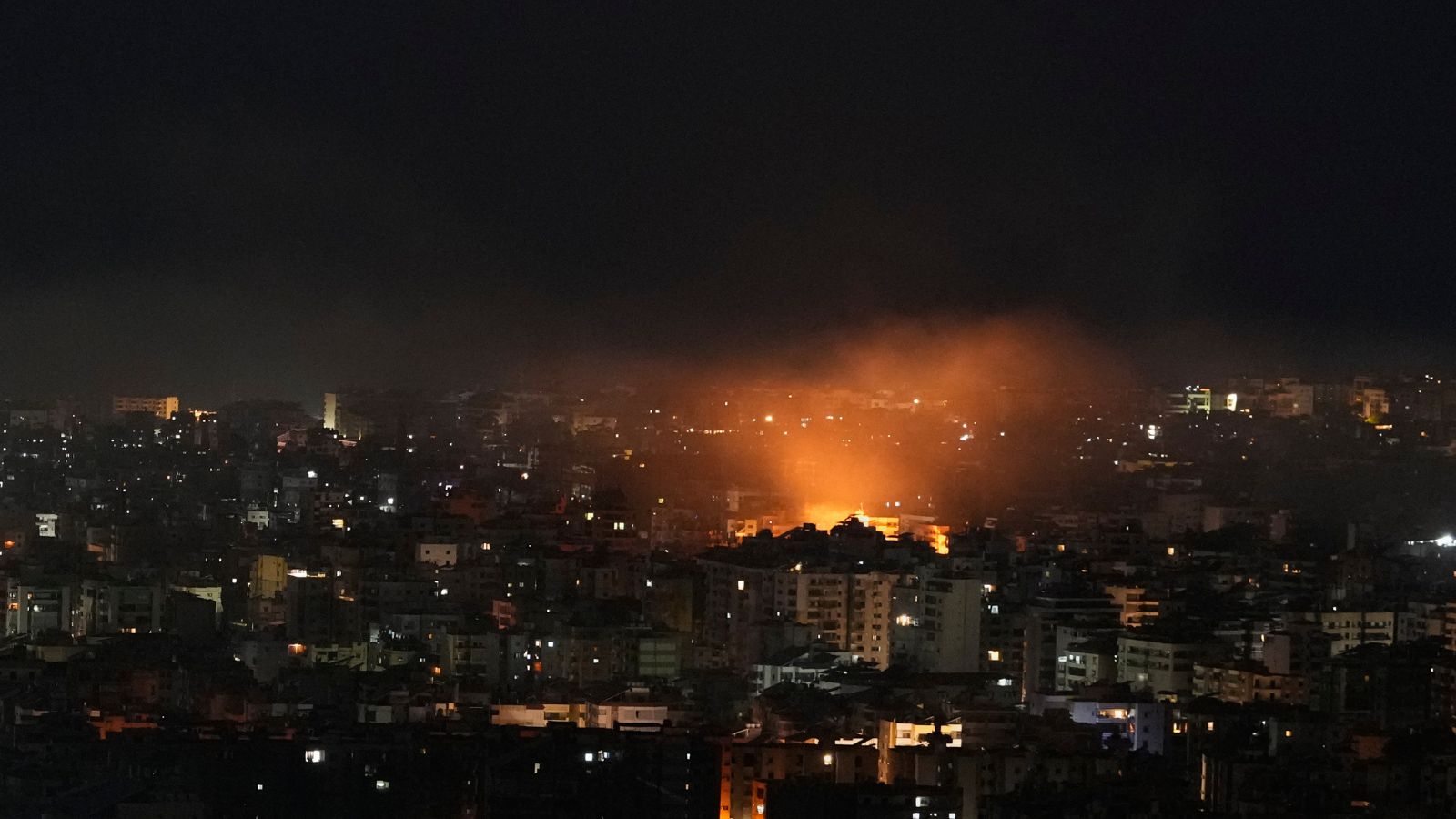
The Israeli Air Force carried out 26 coordinated strikes in the Dahieh district of Beirut, a key Hezbollah bastion, targeting what the Israeli military described as critical militant infrastructure.

According to the Israeli Defense Forces (IDF), the strikes focused on an executive council command centre and a facility used to store unmanned aerial vehicles (UAVs) allegedly deployed in attacks against Israel.
The IDF said precautionary steps were taken ahead of the operation to reduce the risk of civilian casualties.
The strikes came as the US–Israel–Iran conflict entered its seventh day, with hostilities spreading across multiple fronts in the region. Iranian missiles triggered a series of explosions in Tel Aviv earlier on Friday, though Israeli emergency services reported no injuries despite visiting several damaged locations.
Washington signaled the possibility of a further escalation. US Defense Secretary Pete Hegseth warned that American military operations against Iranian targets could intensify significantly in the coming days.
US President Donald Trump claimed that joint American and Israeli operations were “totally demolishing” Iran’s military capabilities, asserting that Tehran’s air force and navy had been largely destroyed during the ongoing campaign.
In a dramatic development at sea, at least 87 people were killed after a torpedo fired from a US submarine sank an Iranian warship off the coast of Sri Lanka, according to reports. Thirty-two survivors were rescued and taken to a hospital in the southern Sri Lankan town of Galle.
Hegseth confirmed the strike, saying the Iranian warship had “died a quiet death”.
Meanwhile, maritime tensions in the Gulf deepened after a tanker anchored off Kuwait reported a large explosion on its port side, according to the United Kingdom Maritime Trade Operations (UKMTO). The vessel began taking on water after the blast, which occurred about 30 nautical miles southeast of Kuwait’s Mubarak Al Kabeer port. The ship’s captain reportedly saw a small craft leaving the area shortly after the explosion.
The rapidly expanding conflict has also triggered global political and economic ripples. The United States has granted India a 30-day waiver to purchase Russian oil shipments stranded at sea, a move aimed at stabilising global energy markets amid the turmoil.
Diplomatic and security concerns are also mounting across the Gulf region. The Indian Embassy in Qatar has issued a fresh advisory urging Indian nationals to strictly follow safety instructions issued by local authorities.
Meanwhile, the US Senate rejected a resolution seeking to limit President Trump’s war powers against Iran without congressional authorization, voting 53–47 against the measure.
The Pentagon has also released the final two names of six US soldiers killed in a drone attack on a command centre in Kuwait’s Port Shuaiba, a strike that occurred a day after the US and Israel launched their military campaign against Iran.
As missile strikes, naval confrontations and air assaults multiply across the region, the conflict now appears to be entering a dangerous new phase with widening military fronts and mounting global implications.