

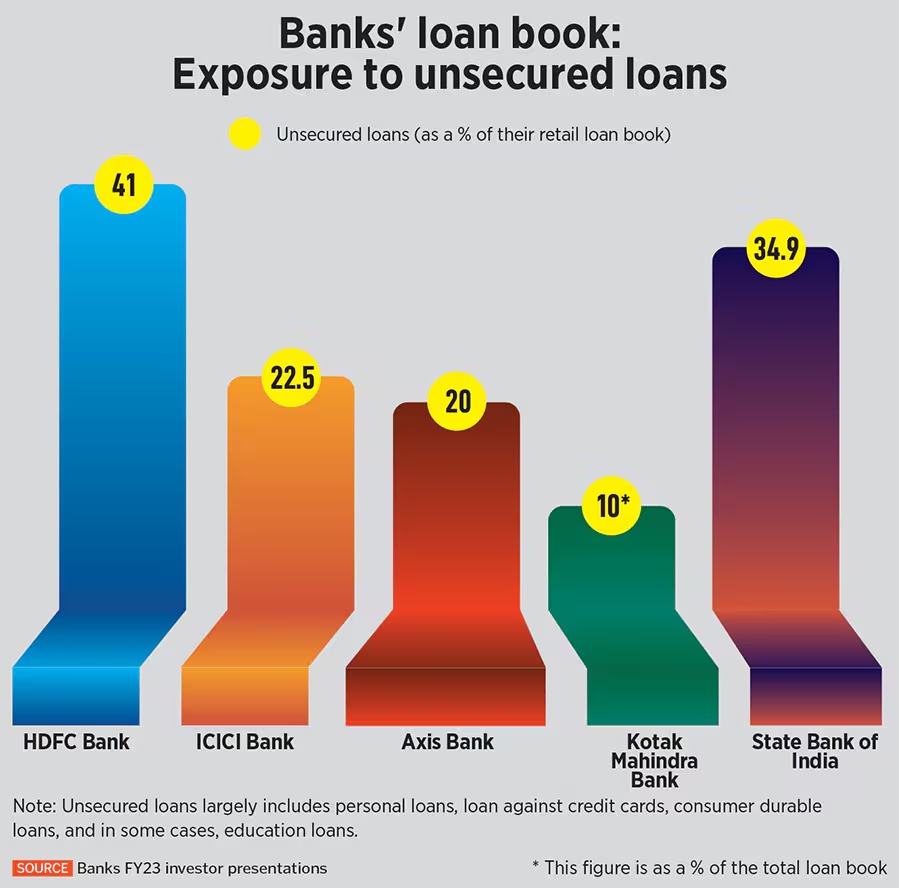
India’s retail credit landscape is set for a transformation, driven by unsecured loans that are rapidly filling the gaps left by collateral-based lending.
Even as the Reserve Bank of India (RBI) imposes tighter regulations to cool what it terms “very high growth” in unsecured credit, fintech companies are emerging as the front-runners, catering especially to younger, first-time borrowers who lack traditional assets.


According to the recent Global Fintech 2025 Report by Boston Consulting Group (BCG) and QED Investors, unsecured lending is becoming the backbone of India’s retail credit expansion.
Unlike the US, where 90% of personal credit is secured, only 65% of India’s personal loans have collateral backing — a reflection of its unique demographic and financial ecosystem.
The country’s advanced credit bureau infrastructure has further fueled this surge.
India’s robust economic growth—7.4% GDP expansion in the final quarter of FY25—coupled with a cultural shift toward credit acceptance, particularly among the burgeoning middle class and youth, is reshaping borrowing patterns.
The middle class is expected to swell from 31% today to 40% by 2031, intensifying demand for consumer credit.
Fintech platforms are capitalizing on this, with 61% of their borrowers under 30 years old, compared to 36% at traditional banks, according to TransUnion CIBIL data.
However, the RBI’s intervention in November 2023 to rein in rapid unsecured loan growth has dampened momentum.
By increasing capital provisioning requirements on most retail loans except housing and education, the regulator has slowed expansion sharply.
Bank credit card balances grew just 10.6% year-on-year by April 2025, and other personal loans rose a mere 9%—down from 34.2% and 24.3% growth rates before the clampdown.
Despite this, fintechs continue to outpace the market. Their live unique customer base grew 40% in 2023 and 15% in 2024, nearly doubling the industry average.
They dominate small-ticket lending, issuing nearly 90% of loans under ₹50,000 in Q4 FY25.
Still, challenges persist. Leading fintech lenders report slowing disbursals amid cautious risk appetites from their funding partners.
Paytm’s personal loan volume dropped 19% quarter-on-quarter to ₹1,422 crore in Q4 FY25, with CEO Vijay Shekhar Sharma warning of continued muted growth unless significant changes occur.
digital loan disbursals plunged 41% in FY25 after it discontinued its ‘Zip’ buy-now-pay-later product due to weak lender interest.
Looking ahead, BCG and QED Investors remain optimistic. Fintechs currently capture just 3% of the $2 trillion global lending revenue pool, and less than 1% outside unsecured personal loans, indicating vast untapped potential.
“Few fintech lenders have weathered a full credit cycle, leaving the industry largely untested,” the report notes.
Nevertheless, with a young, digitally savvy population and growing credit appetite, unsecured loans and the fintech platforms championing them are poised to unlock India’s next phase of retail credit growth—despite regulatory headwinds and market uncertainty.