

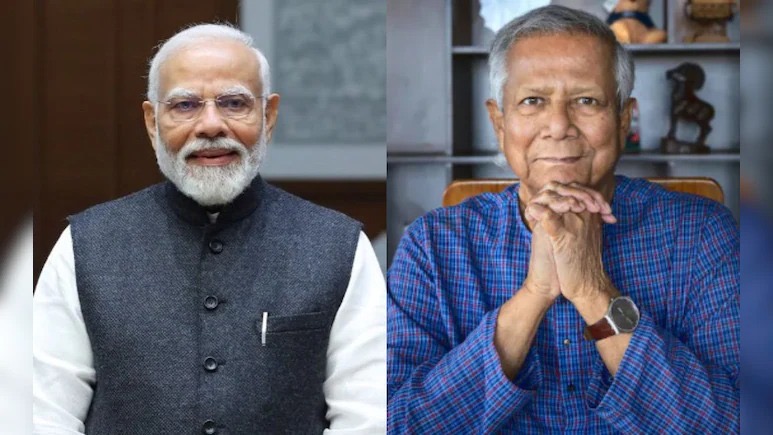
Nobel Peace laureate and Bangladesh’s interim head of state, Muhammad Yunus, has issued a blunt and high-stakes warning to India, demanding action against former Prime Minister Sheikh Hasina’s continued digital outreach from Indian soil — a campaign he claims is inflaming tensions and endangering Bangladesh’s fragile post-crisis recovery.
Speaking at Chatham House in London, Yunus revealed that he had personally appealed to Indian Prime Minister Narendra Modi to curb Hasina’s livestreamed addresses, which are regularly broadcast on YouTube and Facebook to Bangladeshi audiences.

Hasina has been living in India in political asylum since her dramatic ouster in August 2024, and has since used digital platforms to make frequent, often provocative addresses aimed at her followers in Bangladesh.
“I told Mr. Modi — you may host her; I won’t challenge that. But please ensure she doesn’t continue speaking to our people like this. He responded, ‘It’s social media, we cannot control it.’ But you can’t just walk away saying that,” Yunus said, echoing growing frustration in Dhaka’s power corridors.
Yunus warned that Hasina’s broadcasts are acting as flashpoints in an already volatile atmosphere. “She announces her speeches in advance, and the whole country braces for impact. Every time she speaks, the street heats up. This isn’t freedom of speech — it’s remote-controlled unrest,” he said.
Diplomatic freeze and a legal storm
The interim administration has lodged an informal request with New Delhi, seeking Hasina’s extradition. While India has acknowledged the approach, Yunus confirmed there’s been no substantive progress. The silence, he said, is “amplifying suspicion among Bangladeshis.”
“We don’t want revenge — we want a legal, respectful process. But there’s a growing sense that Indian political interests and media disinformation are meddling in our path to reconciliation,” Yunus added, hinting at Indian media narratives allegedly aligned with state actors.
In a major development, Yunus disclosed that the International Crimes Tribunal (ICT) in Dhaka has launched proceedings against Hasina for alleged crimes against humanity, committed during the turbulent final stretch of her regime.
Notices have been served, and the government is weighing the possibility of issuing an Interpol red notice.
The allegations reportedly relate to a wave of crackdowns and extrajudicial actions against political opponents during the last months of Hasina’s rule, prior to her toppling in a civilian uprising.
Regional tremors
The sharp rhetoric threatens to strain India-Bangladesh relations at a time of delicate political transition in Dhaka and rising regional scrutiny. Analysts note that India’s continued silence — and Hasina’s digital megaphone — could backfire diplomatically.
“India must choose between tacit complicity and responsible regional stewardship,” one South Asia analyst noted. “This isn’t just about one leader in exile — it’s about peace in South Asia.”
For now, Sheikh Hasina remains in India — vocal, defiant, and, as Yunus warns, increasingly incendiary. Hasina’s government was toppled after a historic student-led uprising in August 2024, which saw violent crackdowns that killed hundreds.
Her party, the Awami League, was disbanded soon after. Yunus returned from Paris on August 8 and assumed charge as interim head of state.
No political ambitions: Yunus
At 84, Yunus insists he has no desire to remain in power or contest in future elections. His advisory cabinet is also staying away from any political aspirations, he said.
Meanwhile, several student leaders from last year’s uprising have gone on to form the National Citizen Party (NCP) with support from the transitional regime.
Trials against senior Awami League leaders are ongoing, particularly for their roles during the July–August 2024 crackdown. The interim government maintains these are essential for national healing and justice.
“We are trying to rebuild Bangladesh — carefully, legally, and peacefully. But the ongoing digital provocation from across the border is undoing that work,” Yunus concluded.